
Credit approval used to look like this: an application arrives, someone pulls it from a tray, a human manually logs it, another human requests a bureau report, a third human checks the financials, a manager reviews the recommendation, and eventually, sometime between two days and two weeks later, a decision lands in the customer’s inbox.
That process is not a workflow. It is a relay race where the baton gets dropped constantly.
Modern credit departments cannot afford to run approvals that way. Customers expect decisions faster. Sales teams expect turnaround measured in hours, not business days. And credit leaders are being asked to do more with the same headcount.
Workflow automation is how you close that gap, without cutting corners on risk.
What Workflow Automation Actually Means in Credit
Workflow automation in credit approval is not about replacing credit professionals with algorithms. It is about removing the manual, repetitive steps that slow down every application, so your team can focus judgment where judgment actually matters.
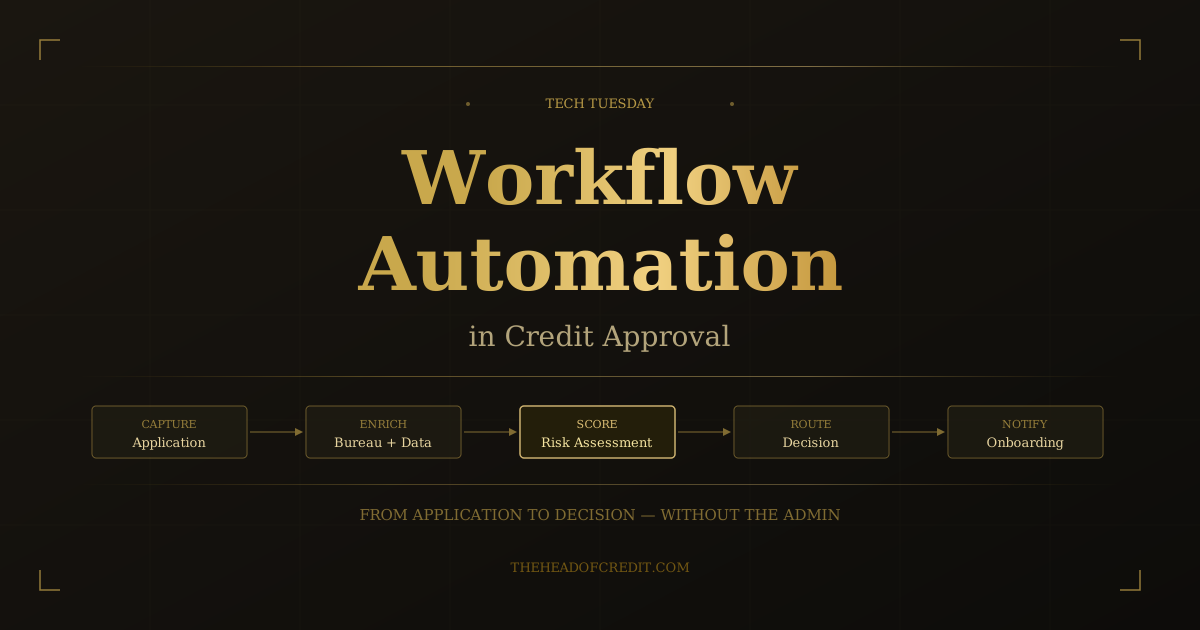
At its core, a credit approval workflow automation system does four things:
- Captures the application data and routes it to the right place automatically
- Enriches that data by pulling bureau reports, trade references, and financial checks without human intervention
- Scores the risk using pre-defined rules or AI-assisted models
- Routes the decision: approve automatically, queue for human review, or escalate based on thresholds you control
None of this removes the credit professional. It removes the dead time between steps.
The Manual Approval Problem
Before you can automate, you need to understand where your current process actually breaks down.
In most credit departments, the real bottlenecks are not the decision points. They are everything around them.
The most common manual drags on credit approval time include:
- Re-keying data from applications into your ERP or credit system
- Chasing references by phone or email, and waiting on callbacks
- Manual bureau pulls that require someone to log in, run the report, and attach it to the file
- Approval routing by email, where requests sit in inboxes while the approver is in a meeting or on leave
- Inconsistent documentation, where each analyst captures information differently and nothing is standardized
These are not credit problems. They are process problems. And process problems are exactly what automation solves.
Where Automation Fits in the Approval Workflow
A well designed automated credit approval workflow covers several stages, each with opportunities to remove manual effort.
Application Capture and Validation
The first step is getting clean data in. Automated forms with built in validation rules can reject incomplete applications at the point of entry, saving your team from chasing missing information after the fact.
Integration with your credit system or ERP means that approved application data populates the customer master file automatically, eliminating re-keying and the errors that come with it.
Bureau and Data Enrichment
Once an application is received, the system should trigger automatic bureau pulls from your preferred provider, trade reference requests sent without manual intervention, UCC lien searches where relevant, and entity verification checks.
The goal is to have a complete credit file assembled and waiting for the analyst before a human even looks at it.
Rules Based Scoring and Decisioning
Most credit departments operate on a band of risk: applications that are clearly good, clearly bad, and everything in the middle.
Automation handles the clear cases. You define the rules: minimum credit score, maximum exposure, industry category, payment history threshold. Applications that meet your approval criteria get approved automatically. Applications that fail hard stops get declined automatically. Everything in the grey zone routes to a human reviewer with the enriched file already assembled.
This is sometimes called a tiered decisioning model, and it is one of the most effective ways to reduce approval cycle time without loosening your actual risk standards.
Approval Routing and Escalation
Automated routing eliminates the inbox bottleneck. Applications are assigned directly to the right reviewer based on dollar value, risk tier, or customer type. Escalation rules trigger automatically when thresholds are exceeded. Reminder notifications fire if approvals are sitting idle.
No more chasing managers for sign-off. No more applications lost in email threads.
Notification and Onboarding
Once a decision is made, automation handles the outbound communication. Approval notifications go to the customer and the sales team simultaneously. Credit terms and limits update in the system. Onboarding tasks trigger for the AR team.
The customer experience improves without anyone manually coordinating it.
Choosing the Right Automation Tools
Credit approval automation sits across several technology categories. Depending on the maturity of your current systems, you may implement one or all of these.
Credit management platforms like Cforia, FICO Blaze Advisor, or Sidetrade include built-in workflow engines designed specifically for credit decisioning.
ERP native workflow tools within SAP, Oracle, or Microsoft Dynamics allow you to build approval workflows that integrate directly with your existing customer master and AR modules.
Low code automation platforms like Microsoft Power Automate, Zapier, or Make are accessible starting points if you need to connect existing systems without a large IT project. They are particularly useful for automating the notification and routing layers.
AI-assisted scoring tools are increasingly embedded in bureau platforms and specialist credit software, allowing dynamic risk scoring based on a broader set of data signals than a traditional scorecard.
Developers such as Search Rebel can build you custom software connections between internal and external systems.
The right choice depends on where your biggest manual drag sits, what systems you already run, and how much configuration your IT team can support.
What to Automate First
Not every credit department should automate everything at once. If you are starting out, focus on the highest volume, lowest complexity decisions first.
A practical starting sequence:
- Automate bureau pulls on every new application. This is typically a quick integration and delivers immediate time savings.
- Build an auto approve rule set for your lowest-risk band. Define clear thresholds, document them, and let the system handle it.
- Automate routing and notifications so approvals stop sitting in email queues.
- Add auto decline logic for hard stops: sanctions hits, bankruptcy flags, or applications below minimum score thresholds.
- Expand your scoring model over time as you accumulate data and confidence.
Each step reduces manual handling and frees your team for the decisions that actually require credit judgment.
The Risk Governance Question
Automation does not eliminate the need for credit leadership oversight. It shifts where that oversight sits.
When you automate credit decisions, you are encoding your credit policy into rules. That means the quality of your automation is only as good as the quality of your policy.
Before you automate any decision, make sure:
- Your approval criteria are documented and signed off at the appropriate level
- Exception handling processes are defined, not assumed
- Your rules are reviewed on a scheduled basis, at minimum annually
- An audit trail is maintained for every automated decision
Regulators, auditors, and your CFO will want to know that a human being designed and approved the rules the system is running. Make sure that documentation exists.
Measuring the Impact
Once automation is in place, the metrics tell the story.
Track these before and after implementation:
- Average approval cycle time from application receipt to decision
- Auto approval rate as a percentage of total applications
- Manual review rate and average time to decision on reviewed applications
- Error rate in the credit file, such as missing data or entry errors
- Sales team satisfaction with credit turnaround, measured informally or by survey
A well implemented workflow automation project typically reduces approval cycle time by 40 to 70 percent for auto decisioned applications. The gains on manual review applications are smaller but still meaningful, because the analyst is working from a complete file rather than assembling it themselves.
Final Thought
The credit approval process has always been about one thing: making a good risk decision, reliably and consistently, on every application.
Automation does not change that goal. It just removes everything that gets in the way of it.
When your team spends less time chasing applications through email chains and manually pulling reports, they spend more time doing what they were hired to do: assess risk, build relationships, and protect the business.
That is what workflow automation is for.

